Deer Creek State Park Golf Course

Rating Snapshot


About
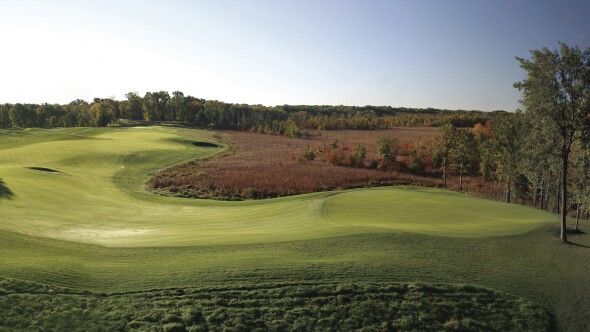
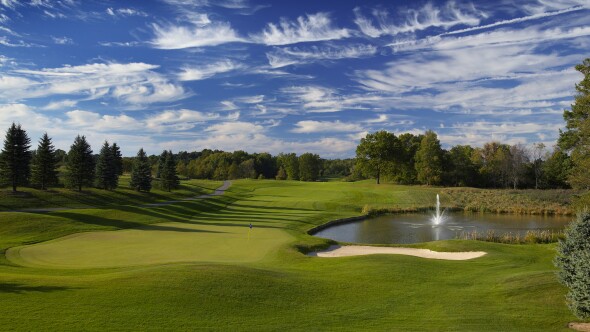
Deer Creek State Park Golf Course is an 18-hole championship course that is one of Jack Kidwell's many designs. On this course, Kidwell, an Ohio native, utilized the scenic natural landscape of mature trees and native Ohio Bluegrass. The course has a gently rolling terrain but it is still easy to walk. The diverse layout has four par 3s heavily guarded by water and trees, 10 lengthy par 4s, and four par 5s. It is a formidable test of your shot-making and course management skills. The long fairways are lined with trees and the challenging greens putt smooth and true. Throughout the golf course there are more than 50 strategically placed bunkers and ten ponds coming into play. In addition to the course, Deer Creek State Park also offers a driving range, practice bunker, and chipping area.
| Tee | Par | Length | Rating | Slope |
|---|---|---|---|---|
| Blue | 72 | 7119 yards | 73.8 | 124 |
| White | 72 | 6605 yards | 71.3 | 120 |
| Yellow | 72 | 5703 yards | 70.5 | 114 |
| Red | 72 | 5627 yards | 69.6 | 113 |
| Hole | 1 | 2 | 3 | 4 | 5 | 6 | 7 | 8 | 9 | Out | 10 | 11 | 12 | 13 | 14 | 15 | 16 | 17 | 18 | In | Total |
|---|---|---|---|---|---|---|---|---|---|---|---|---|---|---|---|---|---|---|---|---|---|
| Blue M: 73.8/124 | 430 | 421 | 185 | 428 | 408 | 435 | 512 | 173 | 573 | 3565 | 541 | 188 | 410 | 414 | 406 | 193 | 569 | 413 | 420 | 3554 | 7119 |
| White M: 71.7/121 | 403 | 392 | 154 | 400 | 374 | 406 | 476 | 152 | 548 | 3305 | 521 | 167 | 386 | 392 | 379 | 164 | 523 | 383 | 385 | 3300 | 6605 |
| Gold M: 71.3/120 | 340 | 344 | 146 | 350 | 300 | 348 | 417 | 138 | 501 | 2884 | 479 | 144 | 323 | 319 | 316 | 134 | 441 | 327 | 336 | 2819 | 5703 |
| Red M: 70.5/114 W: 69.6/113 | 335 | 341 | 140 | 345 | 296 | 343 | 413 | 132 | 496 | 2841 | 475 | 141 | 319 | 315 | 313 | 131 | 438 | 322 | 332 | 2786 | 5627 |
| Handicap | 8 | 9 | 17 | 5 | 13 | 7 | 4 | 18 | 1 | 3 | 16 | 11 | 10 | 14 | 15 | 2 | 12 | 6 | |||
| Par | 4 | 4 | 3 | 4 | 4 | 4 | 5 | 3 | 5 | 36 | 5 | 3 | 4 | 4 | 4 | 3 | 5 | 4 | 4 | 36 | 72 |
Course Details
Rentals/Services
Practice/Instruction
Policies
Food & Beverage
Snacks, RestaurantAvailable Facilities
Conference FacilitiesAvailable Activities
Swimming, BilliardsAvailable Sports
TennisReviews
Reviewer Photos

Yuck
I haven’t been able to make the track to play here in probably 4 years maybe, and I don’t see any reason to return; ever after my round yesterday. This place is by far in the worst condition that I’ve ever seen. No mention that the green were severely aerated because if so I wouldn’t have played here. It was so bad our group had to implement a max two putt rule. You needed a wedge versus a putter due to large amounts of sand on the green.
The fairways were a whole new different story. They were overtaken by crabgrass and weeds. Very poor conditions as a whole, they did purchase new carts thought…
The course comes first not the carts.
Sadden by this because I used to LOVE this course and that feeling is now gone.
Once was a good course
Unfortunately it pans me to say that this course was quite run down and in poor condition. Fairways are transitioning to all crabgrass. Greens are starting to get crabgrass in them as bunkers are in the process of being abandoned!
While I recommend this course it’s only because the greens remain in decent shape and are were done by Kidwell and are very good.
State Park course = not so good
We played here after 1pm which NORMALLY would be the start of where rates decline but not this place, their rates were still extremely outrageous where we paid $35 for 18 and a cart. The condition of this course was in pretty bad shape I hate courses that let patrons set the tone for the pace of play because the patrons in front of us where purposely playing slow because we hit into them when we thought they were done. Get a ranger!! Offer some free golf or do something.
Nice course for everyone
Started playing the white tees. Too long for my aging body. Moved to the yellow and it was just right. The course is well kept and a nice layout.
Fun course
It’s a great course for the hot deal $ could be maintained better around the edges but the fairways are pretty good

DeerCreek StatePark Golf Course
Very good course. Made. For Long hitters. Greens, fairways and roughs all in great condition. Good pace. All people
There. Friendly. Will play there again.
An above average state park course
Good: pace of play ,only 3 hours. Carts have club washers with soapy water, a nice touch
Bad: ridiculously long at 6,600 yards, red tees at 5,600 yards. Virtually all par 4s are 380 + yards, par fives all over 500 yards. Senior tees are just 5 yards longer than the ladies tees. If you can't drive over 200, forget about reaching the green in regulation. Fairways a little long also, negating any roll.
Most of the par 4s are soft doglegs. Not a lot of variety of holes. A good hot deal of $10 was the highlight. Course is worth that, and a little more, but, that's about it
Friendly golf for all
Took our 8 yr old grandson to learn. Everyone was so understanding and helpful. Famous for...you have to start sometime, our future golfers!!! So enjoyable with or without kids.
Lar Bear
I was well pleased with the condition of the course, a little bit of travel for but well worth the trip.
Nice State Park Course
Ohio has some of the best State Parks with golf courses. Made sure to play this course while we stayed at the cabins. Nice challenging layout. Greens and fairways nice. Course in good shape for mid October. Played with my 13 yo daughter and pace was good. All the staff we met were very friendly. Recommend you bring your clubs if you are staying in the park or nearby.
Decent course I have played course a few times and it is always decent and never crowded. will play again
Hidden Gem
Great course well off the beaten path. Made for a quick round at a decent course. Its not a country club but course was in pretty good shape.
Friendly staff
Course was in good condition love taking the driver out all day. Played 18 with my brother in 3 hours. Staff was friendly and helpful. Greens we're okay. Enjoyed the day
Enjoyable and challenging course
The fairways are lined with trees and ponds. Most are long enough to get the use of many clubs. It is mostly level with not much slope; and not at all crowded. It's a nice state park golf course!
Bad day
When we made the turn they had started groups on 10 and we could not finish the round, extremely slow.


Oglebay Golf Around Package
Best of Battle Creek Package