TravelGolf.com
- Updated Daily |
Golf Search
-
Course ReviewsCourse GuideResort FeaturesTravel FeaturesGolf InstructionGolf PackagersReader Forums
WIN Free golf lessons with Butch Harmon!
Win a free golf book!
 

menuNext Day Teetimes

US Course Guide
World Course Guide
Course Reviews
Travel Features
Resort Features
Reader Forums
Free Golf Guides


Home
Advertise Here
Business of Golf
Author Archives
Course Guide
Golf Blog
Golf Instruction
Golf Packagers
Rave of The Week
The Club House
This Week's Buzz


WorldGolfWire.com
-
ARCHITECT SPOTLIGHT

Mark A. MungeamMark Mungeam on the
(re)making of a U.S. Open venue

By Kiel Christianson,
Senior Writer

UXBRIDGE, Mass. (June 2, 2003) -- The USGA's choice of Olympia Fields Country Club outside of Chicago as the site of the 2003 U.S. Open surprised many. Counted among those caught off guard by the announcement was golf course architect Mark A. Mungeam, the man primarily responsible for restoring Olympia Fields to its past glory and current Open-caliber condition. Since 1995, Mungeam has been principle partner in Cornish, Silva, & Mungeam with Geoffrey Cornish and Brian Silva. Despite the highly respected -- and eminently prolific -- company Mungeam keeps, he has been called "low-profile" by the media covering the Open. As the father of five children between the ages of 1 and 10, however, Mungeam might just be more sleep-deprived than low-profile.
TravelGolf.com senior writer Kiel Christianson recently sat down for a phone interview with Mark A. Mungeam to learn some of the inside story behind his work at Olympia Fields and to try to pry some insider predictions as to who might win the most coveted U.S. title this year.

KC: When did you first visit Olympia Fields?

MM: My first visit was in 1992. Our firm had been hired in the late '80s to develop a long-range plan for the two courses there. In 1992 we started a bunker project, which I oversaw, and I've been working on the various projects there ever since.

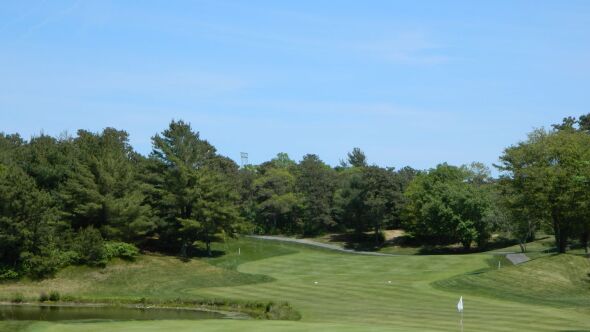
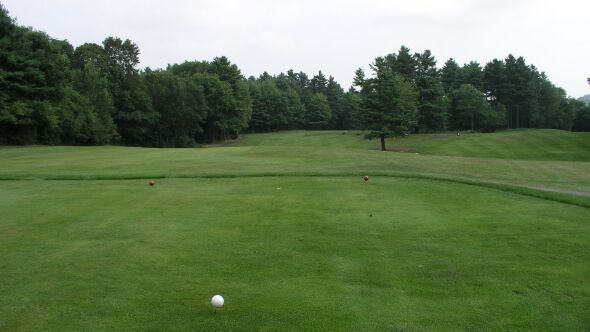
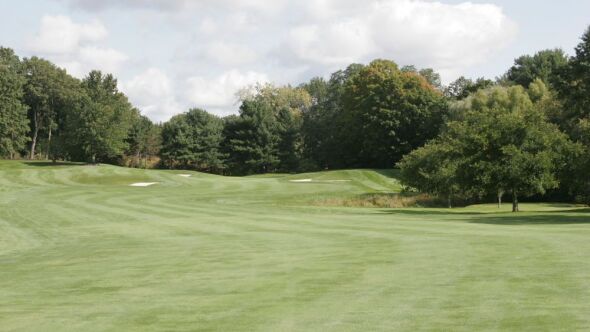
No. 11 at Olympia FieldsKC: When you first laid eyes on it, did you think "U.S. Open venue?"

MM: No, absolutely not. I thought it was an extremely well-maintained course and very nice. But nothing made me think it would host an Open.

KC: What was your reaction when you heard the USGA's announcement?

MM: I was dumbfounded! We'd begun making changes according to our plan when the course was awarded the 1997 Senior Open. What had been a six-year plan became a three-year plan, but the plan itself didn't change. The Senior Open went well. Players were positive, and we had room [on the grounds and on the course] to host a larger event. It was fairly quick between hosting the Senior Open and then getting the U.S. Open. But it was a shock, even though we thought we had a good chance.

Feature: Where to play in Chicago
Resort Features
More golf features

Olympia Fields (North Course) was originally designed by two-time British Open Champion Willie Parks, Jr. When it opened in 1923, it played at 6,700 yards from the tips. Mungeam has stretched it to 7,190 yards (with a par of 70) for the 2003 U.S. Open.

KC: What were Willie Parks's trademarks as a course designer, and were you able to stay true to his design given what the USGA requires of an Open venue?

MM: He didn't have a real trademark.maybe because he didn't do so many courses in the U.S. [The Park-designed] Sunningdale in England was maybe the first really good inland course built in that country. Parks took the game inland. Maidstone on Long Island is perhaps his most famous course in the U.S. Parks liked to perch his greens above the fairway and cut bunkers into the greensides below the putting surface. It is a very natural design, and we've maintained that.

KC: You rebuilt three greens, correct? Which three were they, and will the fact that these were machine finished and the originals were hand finished make them play any differently?

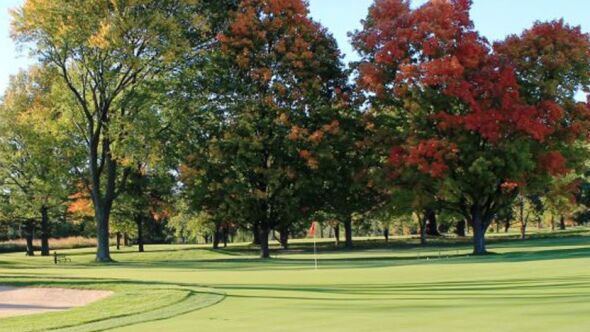
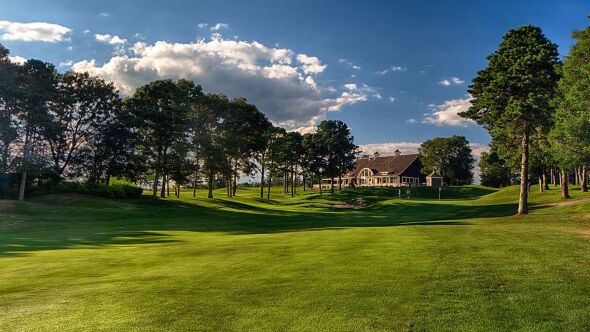
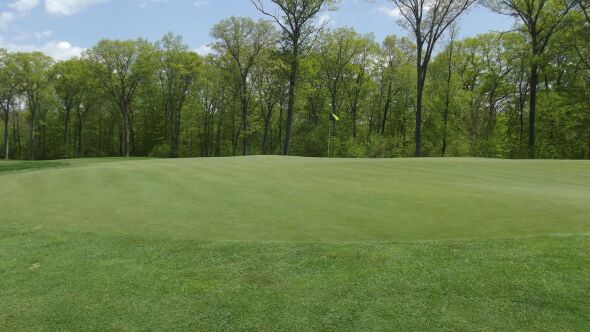
No. 12 at Olympia FieldsMM: We rebuilt the greens on Nos. 15, 12, and 9. No. 15 we had done previously, and the other two were done after the Senior Open. Nos. 9 and 12 were very steep, and as a result they did not have many pin placements. On 12, [the USGA] wanted a front pin placement, but there was no room for one. These three greens won't play any differently. The way they're being maintained, they'll play the same. And we did actually finish by hand with rakes as well.

KC: Aside from the three new greens and the lengthening of the course, what were the major changes?

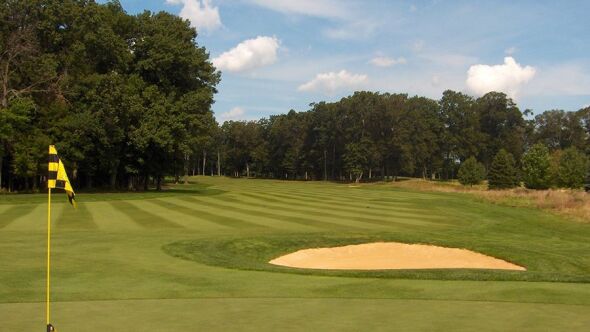
MM: All the bunkers were redone, and a few were added. The seventh hole was quite a project. We had to cut down the bluff and remove a lot of trees so players could see the green from the tee. The members were very wary of this change, because they didn't want to lose the beauty of the hole. We really had to sell this change to them. We also cut a lot of trees for bleachers, cameras and crowds. Bleachers are a big thing -- that's why they flipped the nines, because the back is more open, with room for bleachers around the final greens. (The U.S. Open routing is different from the normal membership routing.)

KC: You probably heard that Tiger and Michael Jordan played a practice round together at Olympia Fields (recently).

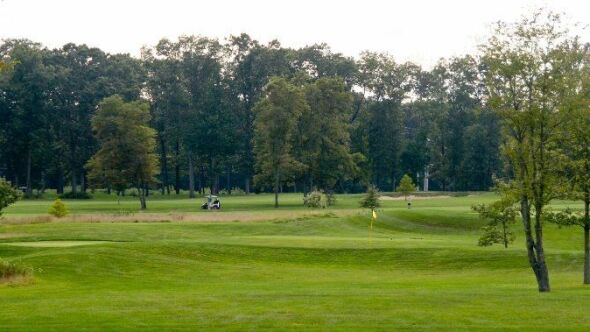
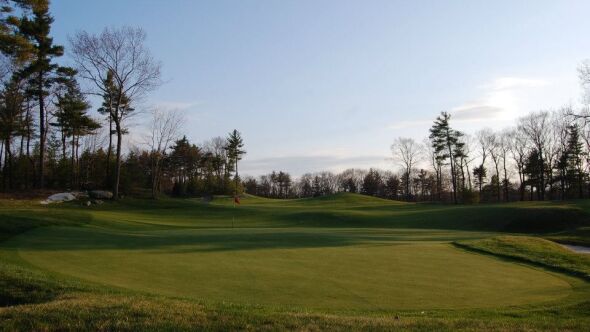
No. 7 at Olympia FieldsMM: I hadn't heard that! Why wasn't I invited? (laughter)

KC: Tiger is reported to have said that if the conditions hold, a new U.S. Open scoring record will be set. Do you concur?

MM: I would think Tiger Woods knows more about that than me. There is potential for players to go low -- a good chance to see 64s or 65s. These guys are so good. It'll be tough to do for four rounds, though. I hope there's some wind. Plus, the course will play better if the greens and fairways dry out a bit.

KC: If scoring goes low, do you think it would hurt the course's chance of being added to the 10-year rotation of Open venues?

MM: I don't know. The USGA would like par to be a good score. They don't come out and tell me to make the course hard, but we all kind of know it. If the winning score is real low, that might hurt the chances of them coming back. And that would be a shame. It's sad to see great old courses become obsolete. That's due to the technology -- we've got to do something about clubs and balls getting longer and longer. We can always make courses harder, but how stupid do you want to get with it? I'll be interested to see what happens.

KC: What holes and features will be key to determining the outcome at this Open?

MM: The biggest challenge at an Open is always the rough. It'll be thick and tough. At Bethpage, the challenge was off the tee. The greens weren't bad. At Olympia Fields, the test will be on the greens. As for holes, the 17th (247-yard par-3) will be the biggest key because of the possibilities for bogeys and the difficulty of getting birdies. The 18th is tight off the tee, and forces some decisions about club choice. The green is "sneaky fast" -- it doesn't look hard, but it has a four- or five-degree slope from right to left. A big draw will run off the left edge.

KC: Aside from Tiger, who do you think has the best chance of winning?

MM: Are you trying to get out of me who I'm picking in the office pool?

KC: Maybe.

MM: I think Mike Weir has a good shot. And David Toms. Olympia Fields is a shotmaker's course. You have to be able to work the ball in all directions.

For more information on Cornish, Silva, & Mungeam, including current projects near Boston and Chicago, go to csmgolf.com.


Readers Tee Off
Post a comment
- -
FREE Vacation
Package Quote

We can help you
find the best deals!
-
Free Masters Package Quote
-
Free Ryder Cup
Package Quote

This Week's Buzz
GolfPublisher.com Add GolfPublisher.com articles/headlines to your web site
Course Reviews | US Golf Guide | Resort Features | Travel Features | Golf Instruction | Golf Schools | Golf Packages | Free Vacation Quote

© Copyright 1997-2008, WorldGolf.com, LLC. For questions, comments or suggestions on any of our network publications, Contact Us!
Privacy Policy