


Golf Club at Cuscowilla

Rating Snapshot


About
| Tee | Par | Length | Rating | Slope |
|---|---|---|---|---|
| Black | 70 | 6730 yards | 72.7 | 133 |
| Burgundy | 70 | 6312 yards | 70.5 | 128 |
| Green | 72 | 5717 yards | 67.7 | 121 |
| Green (W) | 72 | 5717 yards | 73.3 | 132 |
| Orange (W) | 72 | 5183 yards | 70.2 | 125 |
| Orange | 70 | 5183 yards | 65.6 | 114 |
| Hole | 1 | 2 | 3 | 4 | 5 | 6 | 7 | 8 | 9 | Out | 10 | 11 | 12 | 13 | 14 | 15 | 16 | 17 | 18 | In | Total |
|---|---|---|---|---|---|---|---|---|---|---|---|---|---|---|---|---|---|---|---|---|---|
| Black M: 73.3/139 | 373 | 525 | 187 | 414 | 299 | 457 | 380 | 225 | 473 | 3333 | 427 | 125 | 309 | 453 | 614 | 436 | 162 | 397 | 474 | 3397 | 6730 |
| Crenshaw M: 72.1/136 | 373 | 525 | 175 | 375 | 299 | 427 | 380 | 211 | 450 | 3215 | 390 | 125 | 309 | 420 | 590 | 404 | 162 | 397 | 444 | 3241 | 6456 |
| Burgundy M: 71.5/134 W: 76.4/138 | 346 | 506 | 175 | 375 | 293 | 427 | 352 | 211 | 450 | 3135 | 390 | 112 | 294 | 420 | 590 | 404 | 149 | 374 | 444 | 3177 | 6312 |
| Coore M: 69.6/131 W: 74.9/136 | 346 | 506 | 175 | 375 | 293 | 390 | 352 | 178 | 411 | 3026 | 390 | 112 | 294 | 420 | 534 | 349 | 149 | 374 | 416 | 3038 | 6064 |
| Green M: 67.1/120 W: 72.4/131 | 281 | 470 | 142 | 341 | 268 | 390 | 289 | 178 | 411 | 2770 | 311 | 112 | 257 | 365 | 534 | 349 | 149 | 312 | 416 | 2805 | 5575 |
| Orange M: 65.6/114 W: 70.2/125 | 281 | 470 | 129 | 261 | 260 | 355 | 289 | 137 | 411 | 2593 | 256 | 99 | 257 | 365 | 481 | 299 | 105 | 312 | 416 | 2590 | 5183 |
| Light Blue W: 67.1/119 | 281 | 400 | 122 | 261 | 260 | 355 | 268 | 137 | 411 | 2495 | 256 | 99 | 257 | 365 | 423 | 299 | 105 | 312 | 356 | 2472 | 4967 |
| Handicap | 12 | 6 | 16 | 8 | 14 | 4 | 10 | 18 | 2 | 9 | 17 | 13 | 7 | 1 | 5 | 15 | 11 | 3 | |||
| Par | 4 | 5 | 3 | 4 | 4 | 4 | 4 | 3 | 4 | 35 | 4 | 3 | 4 | 4 | 5 | 4 | 3 | 4 | 4 | 35 | 70 |
| Handicap (W) | 10 | 6 | 16 | 14 | 12 | 2 | 8 | 18 | 4 | 11 | 17 | 13 | 5 | 1 | 9 | 15 | 7 | 3 |
Course Details
Rentals/Services
Practice/Instruction
Policies
Food & Beverage
Bar, Snacks, Grill, RestaurantAvailable Facilities
Banquet FacilitiesReviews
Reviewer Photos

Early Coore Crenshaw design easily the best course on Oconee
This is one of Coore/Crenshaw's first efforts as a team and an outstanding track. Built on a former pine tree nursery, the routing and aesthetics are both amazing. The course has softened in recent years - removal of some pine trees and cutting native grass areas.
From my perspective those were not positives. Still the course retains its challenge and enjoyment. Plays much harder than its slope and the switch to Champions Bermuda on the greens several years ago was a huge plus. Unfortunately, the management of the course and project have made a lot of questionable decisions about the amenities and infrastructure in recent years, including inexplicably tearing down a wonderful clubhouse building and grill.

A terrific course that's often overlooked in the Oconee area
At Lake Oconee, golf is often dominated by Reynolds. This course is often overshadowed by the behemoth but should not be overlooked by avid golfers.
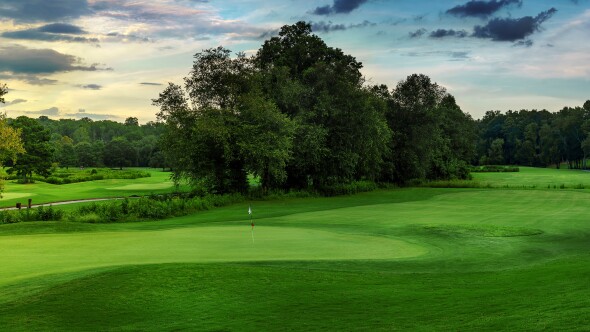
This is a Crenshaw and Coore designed course and true to their style. I often played at Barton Creek when I lived in Austin and the Crenshaw/Coore course there was one of my favorites. The designers have a knack of designing a course that doesn't seem like it's "designed" but simply placed into the natural confines of the area. The bunkers are rough around the edges without being messy or looking unmaintained. The greens (some of them rather large) are softly contoured and tricky to read. The routing seems like it was meant to be, not constructed by bulldozers.
Cuscowilla is a course I always play when I go to Oconee despite the commercial appeal of the Reynolds tracks.

Excellent strategic course in a pretty Georgia setting
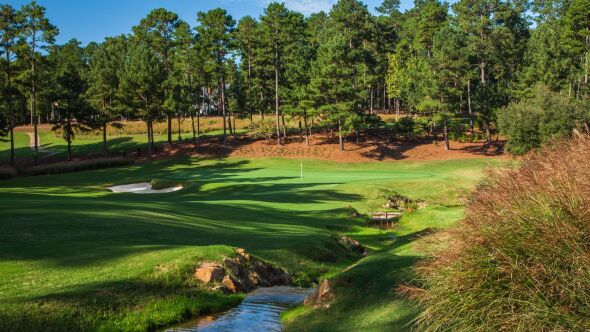
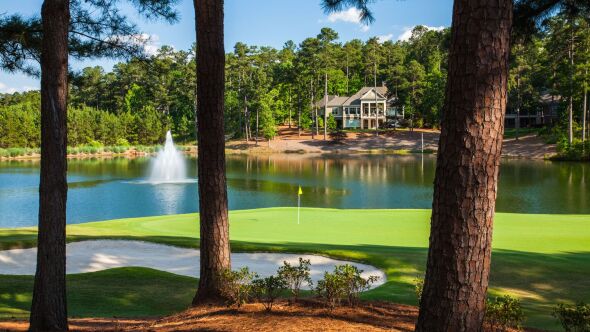
The course is laid out wonderfully through pine trees, ponds, the lake, hills and ridges. Just about every hole has some memorable feature. There are several cape holes, doglegs, a split fairway, excellent bunkers strategically placed to make you think about your shot selections. The greens are terrific. Varied in shape, size, slope, and mounding. The green surrounds often have low cut areas for different chipping or putting options. Fairways have a fair amount of width. Two holes hug the edge of the lake beautifully. There are a bit too many tee shots over ponds that are mundane and obviously manmade. The course has a few short par-4s and long par-4s and nice elevations throughout the property without being severe. Overall I had a great experience playing this course.




Château Élan Stay & Play Golf Package

Robert Trent Jones Golf Trail – Grand National Stay & Play Package

Experience Maggie Valley Package

Sea Pines Resort Stay & Play Package


